

T Ortiz, Congressional Honoree, Anti-Trafficking Advocate and Survivor, Sounds Alarm on the 90% Revictimization Rate
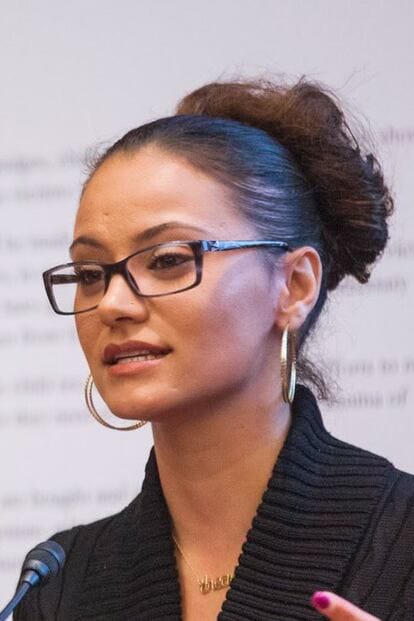
T Ortiz Speaking
As Domestic Violence Awareness Month approaches, Ortiz calls for trauma-informed aftercare to become a policy priority, not an afterthought
HONOLULU, HI, UNITED STATES, September 15, 2026 /EINPresswire.com/ -- Studies show that up to 90% of survivors of domestic minor sex trafficking go on to experience revictimization after exiting exploitation, often finding themselves in another abusive relationship before they have had the chance to fully heal. For T Ortiz, a Congressional honoree and longtime anti-trafficking advocate and survivor, that statistic is not an abstraction. It is a pattern she has spent her career working to interrupt."Survivors are not falling back into harm because something is wrong with them," Ortiz said. "They are falling back into harm because the systems meant to protect them stop paying attention the moment they exit exploitation. We treat the immediate recovery out of exploitation as the finish line. It is not. It is the starting line."
Ortiz has spent almost two decades working at the intersection of lived experience and policy reform, advising organizations including the National Center for Missing & Exploited Children on how trafficking survivors are identified, supported, and too often failed by the systems built to help them. Her work argues that revictimization is not an individual failure but a systems failure, one driven by a lack of trauma-informed aftercare, insufficient long-term support services, and a public health response that treats trafficking as an isolated event rather than an ongoing risk.
As Domestic Violence Awareness Month approaches this October, Ortiz emphasizes drawing a direct line between two crises that are too often treated as separate. Research has shown that trafficking and domestic violence rely on the same underlying tactics and continuum of power and control, and survivors of one are frequently at heightened risk for the other, both before and after exploitation occurs.
"If we want to actually lower that 90 percent, we have to stop designing support systems around the moment someone is recovered and start designing them around the years that follow," Ortiz said. "That means funding aftercare the same way we fund intervention. That means survivor voice sitting in the room when these systems are built, not brought in after the fact to react to them."
Ortiz works directly with organizations, institutions, and government bodies as a keynote speaker, workshop facilitator, and policy advisor. Her services include speaking engagements on trafficking, survivor leadership, and systems reform; trauma-informed curriculum development; and advisory consulting for organizations working at the intersection of domestic violence and trafficking response.
Like much of the advocacy world, Ortiz's public visibility slowed during the pandemic years. She is re-entering the national conversation this fall and is now accepting a limited number of speaking, training, and advisory engagements for the remainder of the year. Her calendar aligns directly with the season's most relevant observances: Domestic Violence Awareness Month in October, National Adoption Month and Runaway Prevention Month in November, and National Human Trafficking Prevention Month in January. Organizations planning programming around any of these moments are encouraged to reach out early, as availability is limited.
"This is the work I was built for," Ortiz said. "If your organization is planning anything around these issues this year, I want to be in the room."
Organizations and event planners interested in booking T Ortiz for speaking, training, or advisory work can learn more and submit an inquiry at www.talkwitht.com.
About T Ortiz
T Ortiz is a Congressional honoree, anti-trafficking advocate, and survivor recognized by TIME and the U.S. Congress for her work at the intersection of lived experience and policy reform. She consults for leading institutions on ending the criminalization of exploited youth, advises on trauma-informed systems change nationally, and is currently booking keynote, training, and advisory engagements for fall and winter 2026.
Media Contact T Ortiz Talk with T www.talkwitht.com
Source: Revictimization statistic (90%) — The Mission Haven, "How to Reduce the Risk of Revictimization for Survivors of DMST" https://www.themissionhaven.org/post/how-to-reduce-the-risk-of-revictimization-for-survivors-of-dmst
T Ortiz
Talk With T
t@talkwitht.com
Visit us on social media:
LinkedIn
Instagram
Facebook
Legal Disclaimer:
EIN Presswire provides this news content "as is" without warranty of any kind. We do not accept any responsibility or liability for the accuracy, content, images, videos, licenses, completeness, legality, or reliability of the information contained in this article. If you have any complaints or copyright issues related to this article, kindly contact the author above.
